
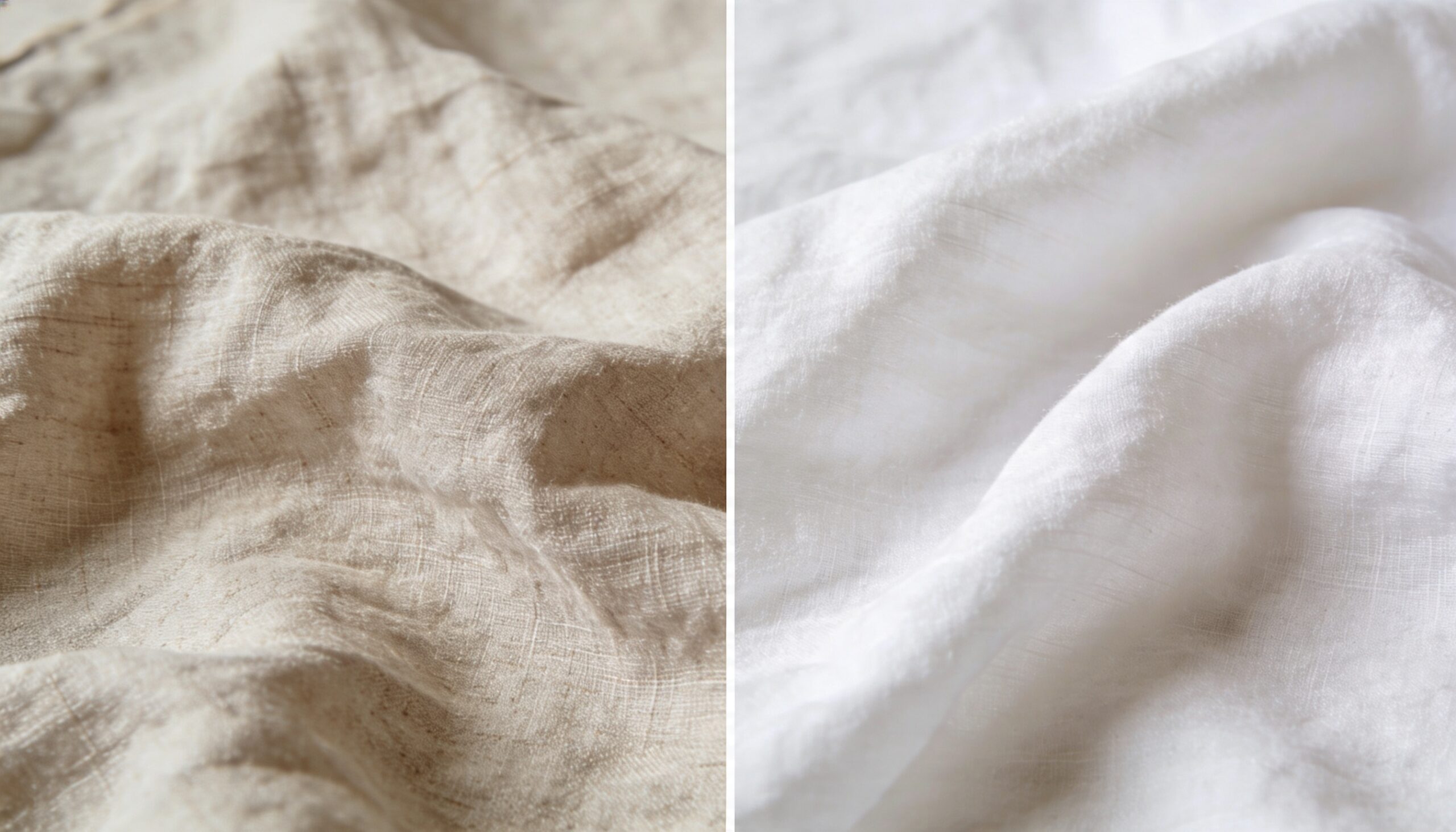
When it comes to natural fabrics, linen and cotton are two of the most popular choices in the textile industry. Both are known for their comfort, breathability, and versatility, but they differ in texture, durability, and overall performance.
Understanding the differences between linen and cotton can help buyers, brands, and consumers choose the right fabric based on their specific needs. In this guide, we compare linen vs cotton across key factors to help you make an informed decision.
What is Cotton Fabric?
Cotton is a soft, natural fiber derived from the cotton plant. It is widely used due to its comfort, affordability, and adaptability across various textile applications.
Cotton fabrics are generally smooth, breathable, and suitable for everyday wear, making them a staple in both casual and premium clothing.
What is Linen Fabric?
Linen is made from fibers of the flax plant and is known for its strength and natural texture. It has a slightly crisp feel and is highly valued for its breathability and durability.
Linen fabrics often have a more structured appearance and are commonly used in warm-weather garments and premium lifestyle textiles.
Key Differences Between Linen and Cotton
1. Texture and Feel
- Cotton: Soft, smooth, and gentle on the skin
- Linen: Slightly rougher initially, becomes softer over time
2. Breathability
- Cotton: Breathable and comfortable for daily use
- Linen: Highly breathable and ideal for hot climates
3. Durability
- Cotton: Durable but may wear out faster than linen over time
- Linen: Extremely strong and long-lasting
4. Moisture Absorption
- Cotton: Absorbs moisture well but can retain it
- Linen: Absorbs and releases moisture quickly, dries faster
5. Appearance
- Cotton: Smooth and uniform look
- Linen: Natural, textured, and slightly wrinkled appearance
Uses of Linen vs Cotton
Cotton is commonly used for:
- Everyday clothing (t-shirts, shirts, undergarments)
- Home textiles (bedsheets, towels)
- Casual and daily wear
Linen is commonly used for:
- Summer clothing (shirts, dresses)
- Premium apparel
- Table linens and home décor
- Lightweight fashion garments
Which Fabric is Better?
There is no one-size-fits-all answer, the better fabric depends on the intended use.
- Choose cotton for softness, affordability, and everyday comfort
- Choose linen for durability, breathability, and premium feel
For many applications, businesses also prefer blending both fibers to combine comfort with performance.
Why Fabric Choice Matters in Textile Production
Selecting the right fabric directly impacts product quality, customer satisfaction, and long-term performance.
At Omnitex Solutionss, we support buyers with both cotton and linen sourcing, ensuring consistent quality, scalable supply, and materials suited to different market needs.
Conclusion
Both linen and cotton have unique strengths, making them valuable in different textile applications. While cotton offers softness and versatility, linen stands out for its durability and breathability.
By understanding their differences, you can make smarter choices , whether for fashion, home textiles, or large-scale production.