
Viscose fabric has become a popular choice in the textile industry due to its soft feel, smooth texture, and versatility. Often used as an affordable alternative to natural silk, viscose offers a balance between comfort and style.
Despite its luxurious appearance, many people are unaware of what viscose actually is and how it differs from other fabrics. In this guide, we’ll break down everything you need to know about viscose fabric from its composition to its uses and benefits.
What is Viscose Fabric?
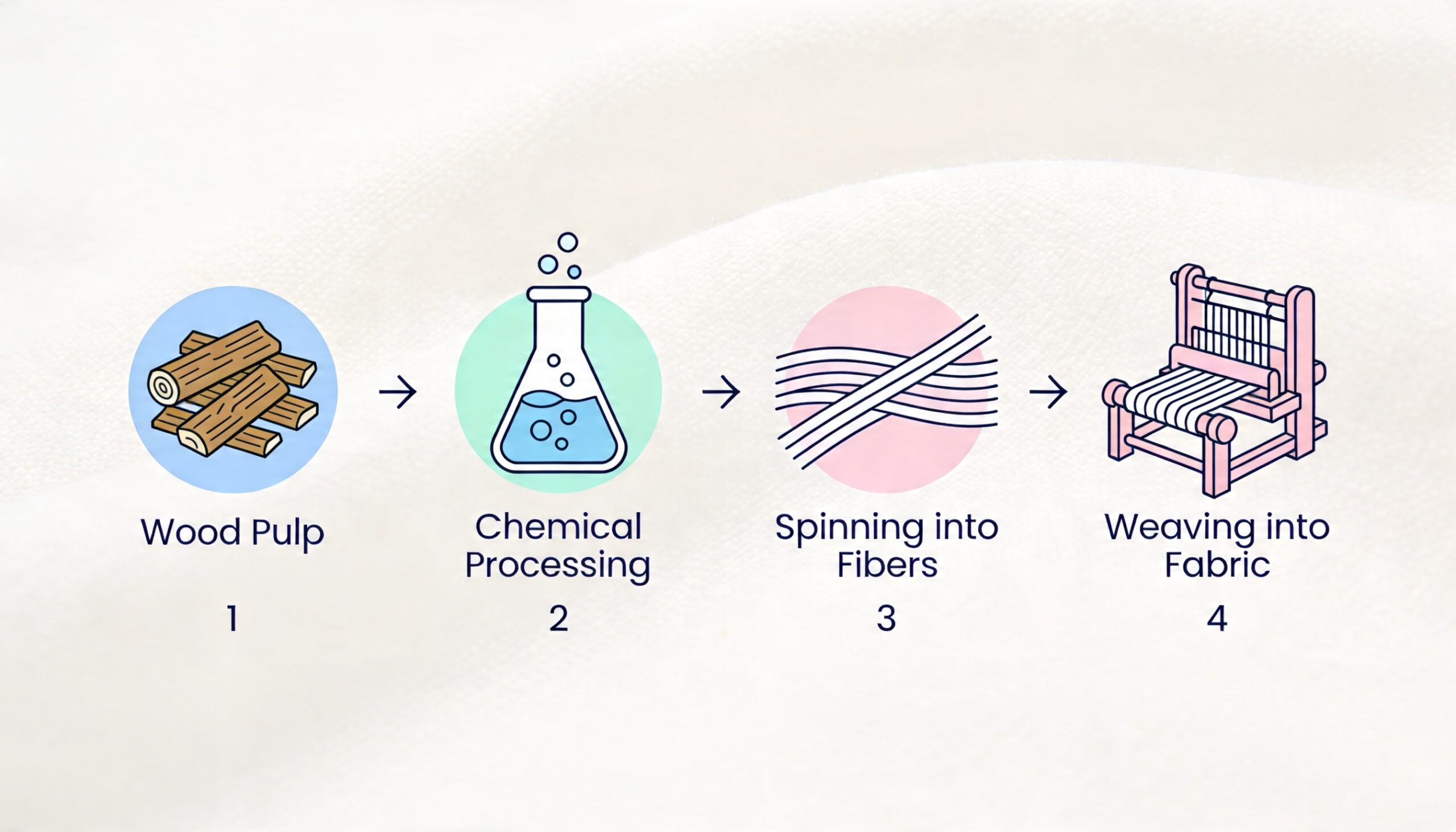
Viscose is a semi-synthetic fabric made from natural cellulose, typically derived from wood pulp. Through a chemical process, the cellulose is transformed into fibers that are then spun into yarn and woven into fabric.
Because it originates from natural sources but undergoes processing, viscose is often described as a bridge between natural and synthetic textiles.
How is Viscose Made?
The production of viscose involves several steps:
- Extracting cellulose from wood pulp
- Treating it with specific chemicals to form a solution
- Spinning the solution into fibers
- Processing the fibers into yarn and fabric
This process allows manufacturers to create a fabric that is soft, smooth, and adaptable for different applications.
Key Properties of Viscose Fabric
- Soft and Smooth Texture
Feels similar to silk, making it comfortable to wear - Breathable
Allows air circulation, suitable for warm weather - Lightweight
Ideal for flowy garments and layering - Excellent Drape
Falls naturally, enhancing garment appearance - Highly Versatile
Can be blended or used in various fabric types
Common Uses of Viscose Fabric
Viscose is widely used across multiple textile applications:
- Fashion garments (dresses, tops, skirts)
- Lining materials in clothing
- Home textiles (curtains, upholstery blends)
- Lightweight scarves and accessories
- Blended fabrics for enhanced performance
Benefits of Viscose Fabric
- Affordable Alternative to Silk
Offers a premium look without high cost - Comfortable for Daily Wear
Soft and breathable for extended use - Adaptable Across Styles
Suitable for both casual and formal wear - Blend-Friendly
Works well with cotton, polyester, and other fibers
Things to Consider
While viscose has many advantages, there are a few considerations:
- May require careful washing and maintenance
- Can lose strength when wet if not processed properly
- Quality can vary depending on manufacturing standards
Why Viscose Matters in Textile Production
Viscose plays an important role in modern textile manufacturing due to its flexibility and cost-efficiency. It allows brands to create stylish, comfortable garments while maintaining scalability.
At Omnitex Solutionss, viscose materials are selected and processed with consistency in mind, ensuring reliable quality for both standalone and blended fabric production.
Conclusion
Viscose fabric offers a unique combination of softness, elegance, and versatility, making it a valuable material in today’s textile industry. Whether used in fashion or functional textiles, it provides a balance of comfort and affordability.
Understanding viscose helps businesses and consumers make better choices when selecting fabrics for different needs.